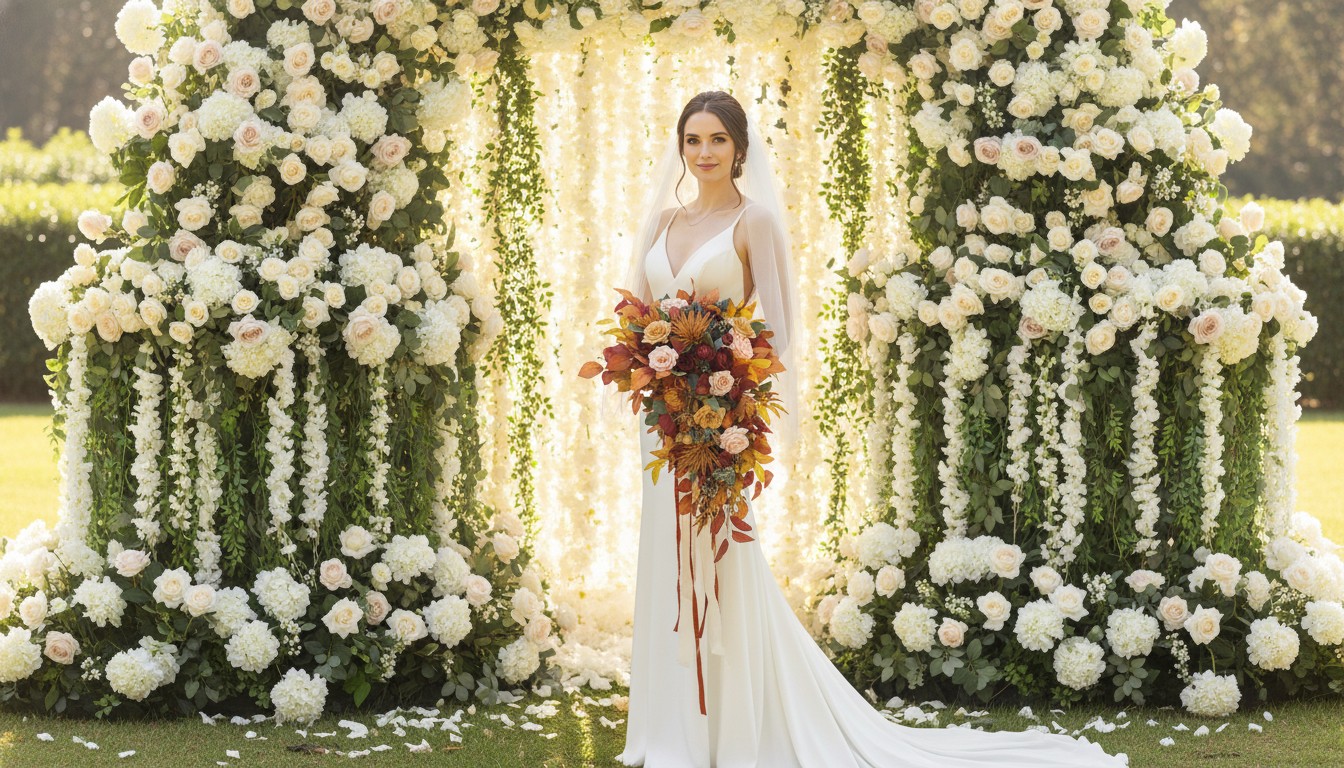
If you’ve been searching “what is a cascading bouquet,” you’re not alone. This timeless bridal style has made a major comeback, thanks to its dramatic shape and romantic feel. But what exactly is it—and is it right for your wedding?
Here’s everything you need to know, from definition to styling tips.
What Is a Cascading Bridal Bouquet?
A cascading bridal bouquet (also known as a waterfall bouquet) is designed to flow downward, creating a natural, trailing effect. Unlike traditional round bouquets, it features a mix of structured blooms at the top and loose greenery or flowers that “cascade” below.
Key features:
- Teardrop or waterfall shape
- Dramatic, elongated silhouette
- A mix of focal flowers and trailing elements
This design adds movement, elegance, and a slightly dramatic touch to your overall bridal look.
Popular Cascading Bouquet Styles
1. Classic Cascade
This is the most traditional version—balanced, symmetrical, and elegant. It often features roses, orchids, and soft greenery.
Best for: Formal or black-tie weddings
2. Loose & Organic Cascade
A more modern take with asymmetrical shapes, wild greenery, and a “just-picked” feel.
Best for: Boho, rustic, or outdoor weddings
3. Minimalist Cascade
A simplified version with fewer flowers and cleaner lines. It focuses more on shape than fullness.
Best for: Modern or minimalist weddings
4. Dramatic Full Cascade
This style is larger, fuller, and more eye-catching, with long trailing vines or flowers.
Best for: Statement bridal looks and grand venues
Common Shapes Explained
Although all cascading bouquets flow downward, they can vary in structure:
- Teardrop Shape: Balanced and slightly rounded at the top, narrowing at the bottom
- Free-Flowing Shape: Asymmetrical and natural, with uneven trailing elements
- Structured Cascade: Clearly defined outline with controlled length
Choosing the right shape depends on how polished or relaxed you want your bouquet to feel.
How to Hold and Wear a Cascading Bouquet
Because of its unique shape, a cascading bouquet is held differently from a round bouquet.
Tips for wearing it well:
- Hold it slightly lower than waist level to show the full cascade
- Angle it slightly forward so the trailing elements are visible
- Keep your posture upright—this style pairs best with confident, open poses
Which Wedding Dresses Work Best?
Cascading bouquets pair beautifully with certain dress styles:
- A-line & ball gown: Enhances the dramatic, romantic feel
- Simple sheath dresses: Adds visual interest and movement
- Long trains or veils: Complements the flowing effect
Avoid pairing with:
Highly detailed dresses that may visually compete with the bouquet.
Pros and Cons
Pros:
- Elegant and eye-catching
- Adds movement and dimension
- Works for both classic and modern weddings
Cons:
- Can feel heavy if oversized
- Requires more careful handling
- May overwhelm petite frames if not sized properly
Is a Cascading Bouquet Right for You?
Choose this style if you want:
- A romantic, elevated bridal look
- A bouquet that stands out in photos
- A design that complements flowing fabrics and silhouettes
Final Thoughts
A cascading bridal bouquet is more than just a floral arrangement—it’s a statement piece. With its flowing shape and versatile styles, it can be adapted to fit almost any wedding theme.
If you’re looking for something elegant, slightly dramatic, and unforgettable, this might be the perfect bouquet for your big day.