A cascading bouquet is elegant and eye-catching, adding natural movement to your bridal look. But color matters just as much as shape—the right palette enhances your theme, while the wrong one can clash.
If you’re choosing your bouquet colors, this guide will help you match them to your wedding theme with ease.
1. Understand Your Wedding Theme First
Before choosing colors, get clear on your overall wedding aesthetic. Ask yourself:
- Is your wedding modern, rustic, boho, classic, or romantic?
- What are your venue colors and surroundings?
- What mood are you trying to create?
Your bouquet should complement—not compete with—your theme.
2. Classic & Elegant Weddings
Best Colors: White, ivory, blush, soft greenery
For timeless weddings (think ballrooms, churches, black-tie events), soft and neutral tones work best. A cascading bouquet in white roses with subtle greenery creates a refined, graceful look.
Tip: Add texture with trailing orchids or greenery instead of bold colors.
3. Rustic & Earthy Weddings
Best Colors: Terracotta, burnt orange, deep reds, dusty neutrals
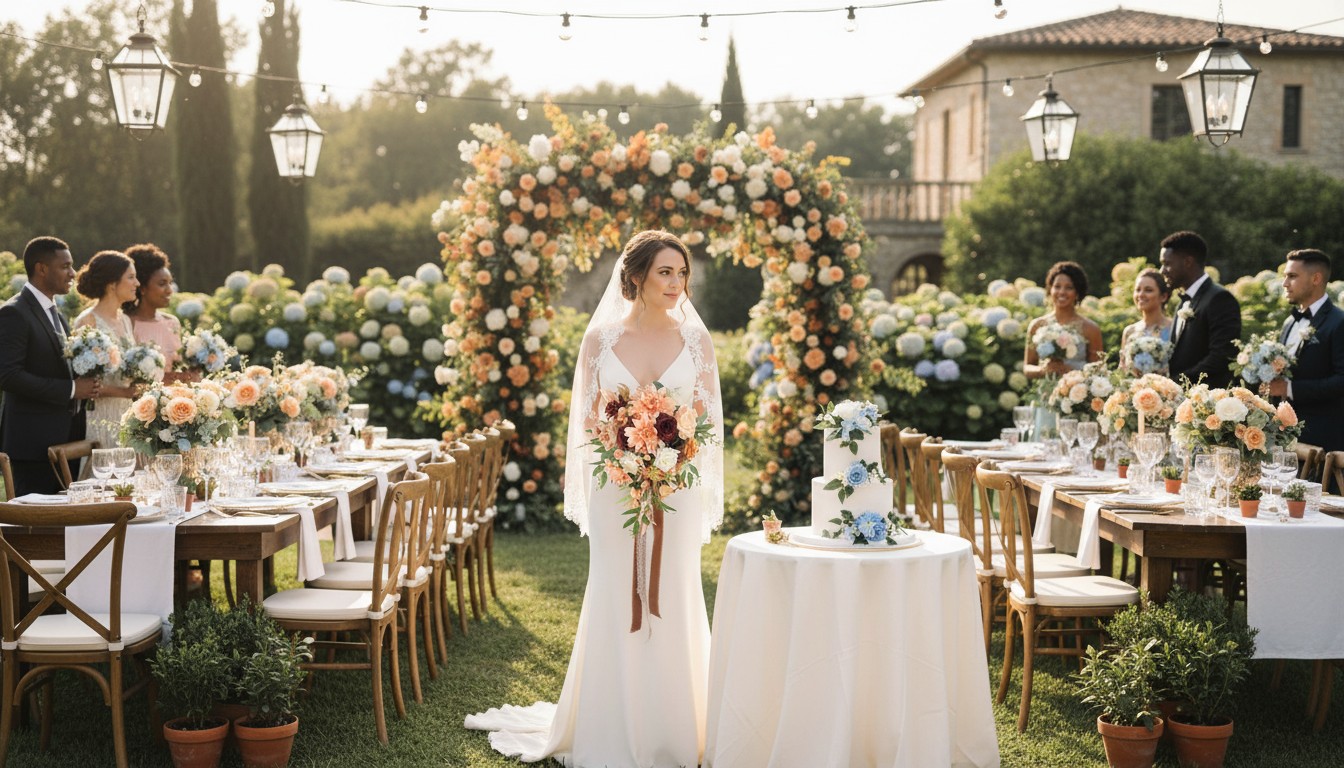
Rustic weddings—especially in barns or outdoor settings—pair beautifully with warm, earthy tones. A cascading bouquet featuring Terracotta roses, dried elements, and muted greenery creates a cozy, grounded aesthetic.
Why it works: Terracotta tones echo natural elements like clay, wood, and autumn landscapes, making your bouquet feel connected to the environment.
4. Boho & Nature-Inspired Weddings
Best Colors: Sage green, beige, soft peach, muted pinks
Boho weddings are all about relaxed, organic beauty. A cascading bouquet with Sage Green foliage, paired with soft neutral blooms, creates a dreamy, effortless vibe.
Styling idea: Mix eucalyptus, pampas grass, and soft florals for a free-flowing, slightly wild look.
5. Modern & Minimalist Weddings
Best Colors: Monochrome (white, black accents), green, or bold single tones
Modern weddings benefit from clean, intentional color choices. A cascading bouquet in crisp whites with structured greenery—or even a bold single-color statement—can look incredibly striking.
Tip: Keep the shape sleek and avoid overly “busy” color combinations.
6. Romantic & Garden Weddings
Best Colors: Blush, lavender, dusty rose, soft pastels
Garden weddings call for soft, romantic palettes. A cascading bouquet in layered pastels creates a lush, storybook feel.
Enhancement idea: Add trailing vines or delicate flowers like sweet peas to enhance the flow.
7. Seasonal Color Matching
Your wedding season can also guide your bouquet color:
- Spring: Soft pastels, blush, light greens
- Summer: Bright whites, corals, fresh greens
- Fall: Terracotta, rust, deep burgundy
- Winter: White, deep red, emerald, icy tones
Using seasonal colors helps your bouquet feel natural and cohesive.
8. Match (or Contrast) with Your Dress
Most brides choose white or ivory gowns, which makes bouquet color stand out even more.
- For a soft look: stay within neutral or pastel tones
- For a bold look: introduce contrast (like terracotta or deeper hues)
- For trendy palettes: combine Sage Green with warm neutrals for balance
Final Thoughts
Choosing the right cascading bouquet color isn’t about following strict rules—it’s about harmony. Your bouquet should reflect your theme, your personality, and the overall atmosphere of your wedding.
Quick takeaway:
- Elegant wedding → soft neutrals
- Rustic wedding → Terracotta & warm tones
- Boho wedding → Sage Green & muted hues
- Romantic wedding → pastels
When in doubt, look at your venue, your dress, and your color palette—and let those guide your decision.
Bottom Line
A well-chosen cascading bouquet color doesn’t just look beautiful—it completes your entire wedding story.